Storm-Damaged Tree Split Down to the Trunk - Had to Go
Storm damage has a way of creating problems that can't wait. When a tree takes a bad split - especially one that sends a major limb leaning hard against neighboring trees - the clock starts ticking. That kind of structural failure doesn't stabilize on its own. It gets worse.
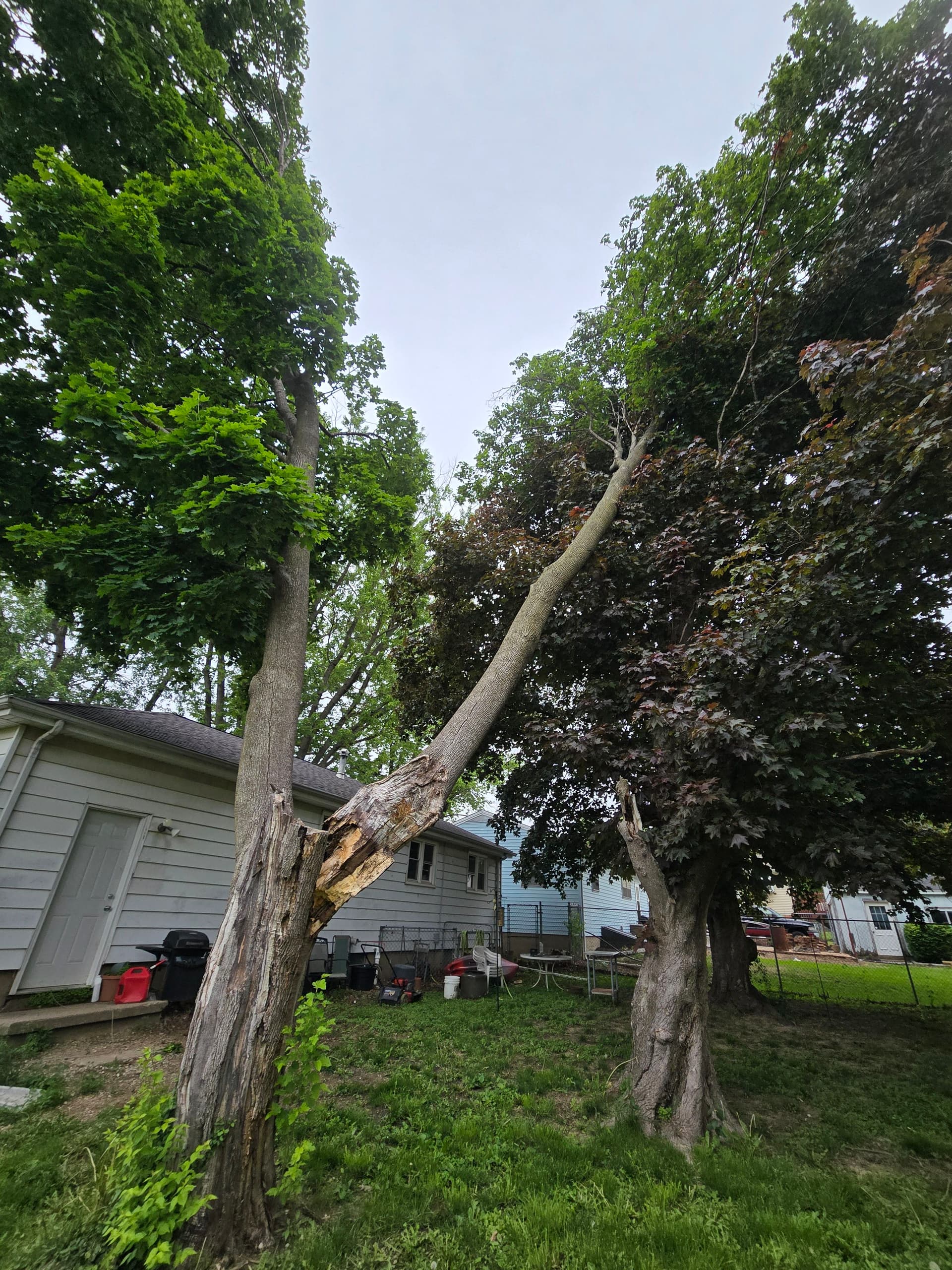
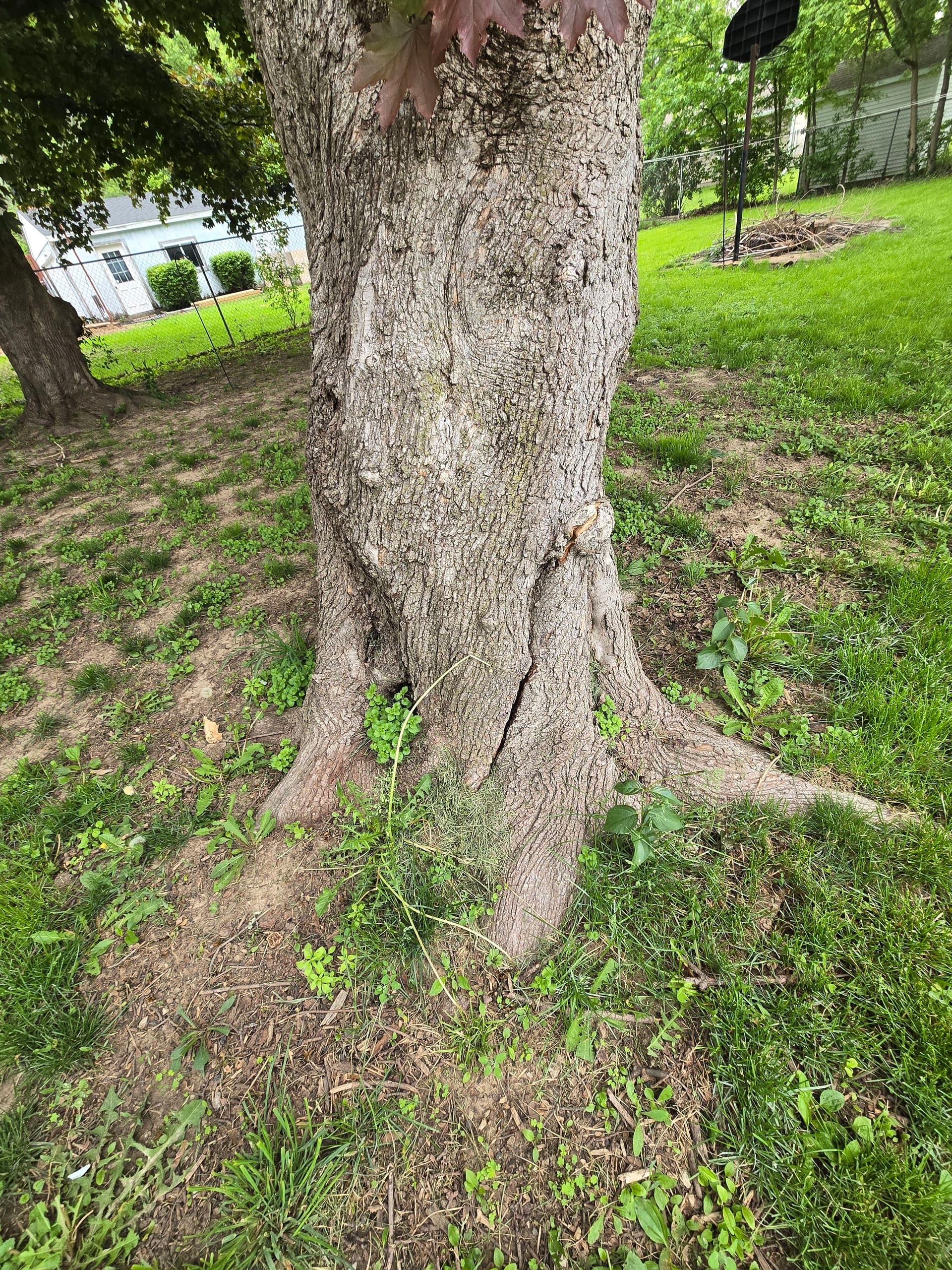
Here's what we were working with on this one. The trunk had cracked and split low, sending a large section of the tree leaning at a sharp angle into the canopy of the trees next to it. The bark was torn back and the wood exposed at the break point. With a house sitting close by, this wasn't something to sit on.
A split like that means the tree has lost its structural integrity at the base. The weight of that leaning section puts stress on everything around it - the neighboring trees, the fence line, and anything else in the drop zone. Getting it down safely meant working through the lean carefully so nothing came down where it shouldn't.
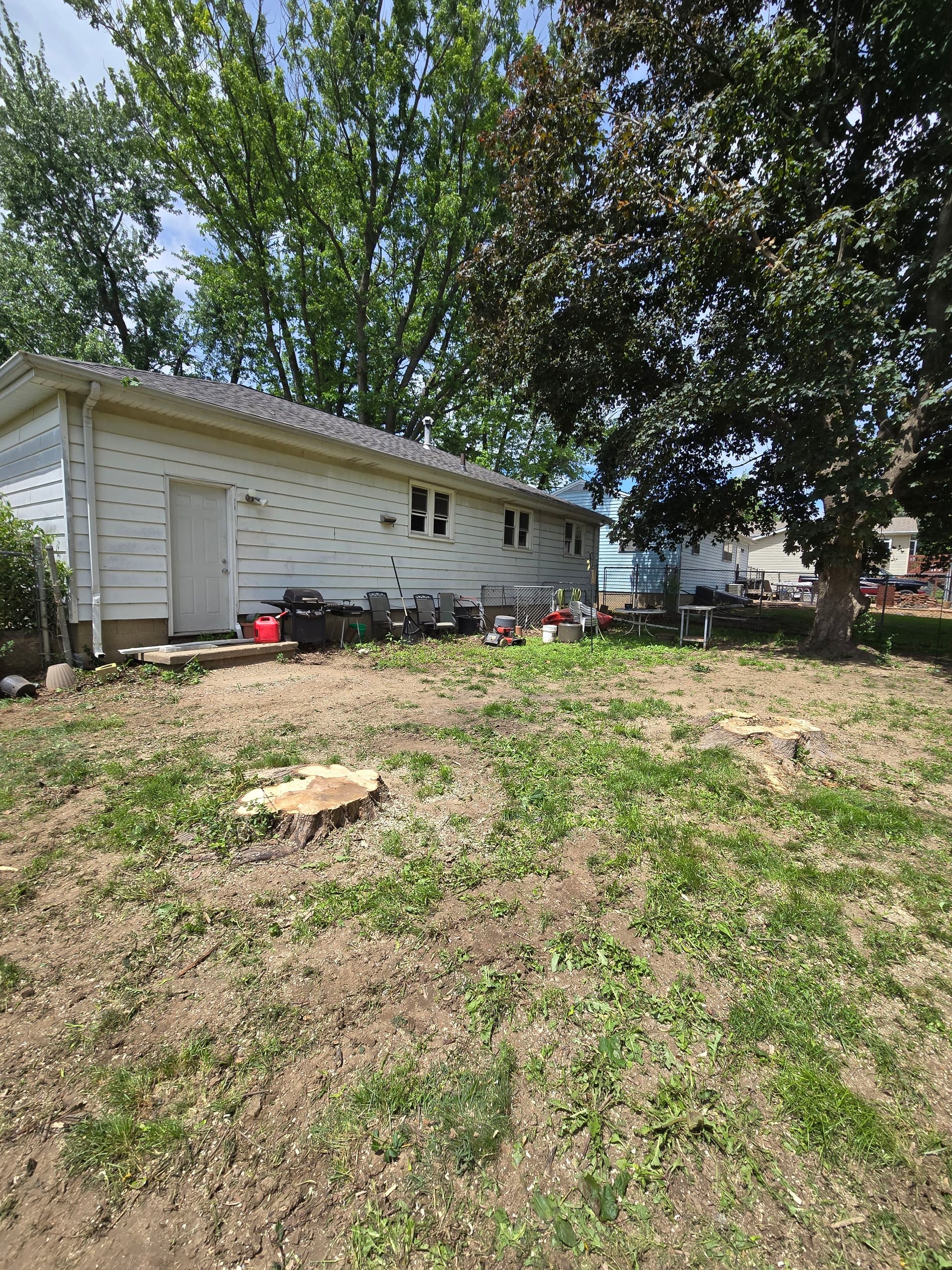
We removed the damaged tree and cleared out the debris completely. The yard went from a real hazard to open, usable space. Two stumps remained after the removal - those get taken care of with stump grinding when the customer is ready, so there's nothing left to trip over or work around.
If a storm left you with a tree that's cracked, leaning, or showing signs of failure, don't wait on it. The longer a compromised tree sits, the fewer options you have - and the more dangerous the situation gets.